


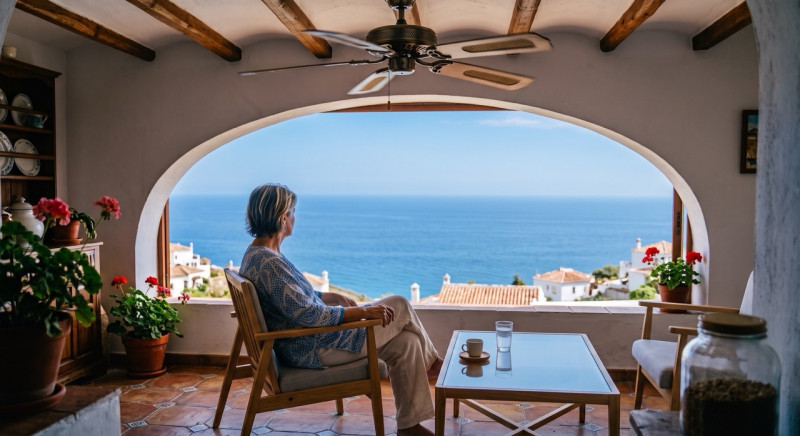
After nine years of walking through villas, townhouses and apartments across Mijas, Fuengirola, Riviera del Sol and everywhere in between, one question comes up again and again from buyers moving here from cooler climates: "Why is the house built like this?"
It's a good question, and the answer is really a masterclass in living with the Mediterranean sun rather than fighting it. Because we also work alongside our renovation arm, Norton & Daughters, we get to see these building standards from both sides, as agents helping buyers choose the right home, and as builders who understand exactly what's behind the walls. That combination means we're not just pointing out nice features; we're able to tell you whether the insulation, glazing and materials in a property genuinely meet the standard they should. Here's what I always point out when I'm showing a property.
Marble and tile floors: the original air conditioning
Long before anyone had a compressor unit humming away outside, homes here relied on thermal mass and conductivity to stay cool. Marble and ceramic tile floors don't just look elegant; they actively pull heat away from bare feet and keep the ground floor of a home noticeably cooler than the air around it. Walk into a Spanish home in August, and the first thing you'll notice is that cool floor underfoot. It's not an accident; it's centuries of design wisdom.
Cross-ventilation and through-drafts
Older Andalusian homes, and many well-designed modern ones, are built around the idea of air moving through the property rather than sitting stagnant in it. Windows and doors are often positioned opposite one another, or shutters are angled to catch the evening breeze, so that opening up the house at the right time of day creates a natural through-draft. Combine that with high ceilings in traditional builds, and you get a home that manages a huge amount of its own cooling without ever switching anything on.
Ceiling fans are another feature I always flag to buyers, especially for bedrooms. Once the temperature drops in the evening but the air is still and heavy, a fan keeps that air moving over you all night without the cost, or the noise, of running AC through to the morning. It's a simple, low-energy addition that makes a real difference to sleep quality through the summer months, and most good developments now fit them as standard in bedrooms and living areas.
Air conditioning, done efficiently
Of course, in July and August, ventilation alone won't always cut it, and this is where air conditioning comes in. But not all AC is equal. Buyers should look closely at:
- Inverter technology (adjusts output rather than switching fully on and off, which saves significantly on electricity)
- Energy rating (A++ or higher is worth paying more for upfront)
- Zoned systems, so you're not cooling rooms you're not using
- Good insulation working alongside the AC, not instead of it
A well-insulated home with efficient AC will cost a fraction to run compared with an older property with single-glazed windows and a basic split unit.
Windows and doors: the quiet heroes
This is one area where I've seen the biggest shift in new-build design over the last few years. Double glazing, thermal break aluminium frames, and solar control glass all make a real difference to how much heat gets into a home in the first place. Shutters, pergolas and deep overhangs also do a huge amount of work, shading windows so the sun never directly hits the glass during the hottest part of the day. It's far more efficient to stop heat entering a home than to remove it once it's inside.
The winter twist nobody warns you about
Here's the part that surprises a lot of new arrivals. All of those clever heat-blocking materials that make summer so bearable also block heat retention in winter. Marble floors that feel wonderfully cool in July feel genuinely cold underfoot in January. Thick walls and shaded windows designed to keep the sun out in summer do exactly the same job in winter, keeping the low winter sun's warmth out too.
Winters on the Costa del Sol are mild by most standards, but many homes here still need heating indoors, sometimes more than people expect, simply because the building materials are working exactly as designed. It's a case of the house doing its summer job a little too well, twelve months a year.
Why solar panels make so much sense here
This is exactly why solar has become such a smart addition to homes in this region. We get strong sun in summer and, just as importantly, plenty of clear sunny days in winter too. A well-specified solar setup can offset the electricity load of both the summer AC and the winter heating, which is precisely the combination that catches a lot of new homeowners off guard when they see their first full year of bills. It's not just an eco-friendly extra any more, it's genuinely practical economics for this climate.
What this means when you're buying
When clients ask me what to look for, I always come back to the same checklist:
- Double glazing and thermal break window frames as standard, not an upgrade
- Shutters, pergolas or architectural shading over south-facing glass
- Solar panels already installed, or roof space and orientation that would support them
- Efficient, ideally inverter-based, air conditioning with good energy ratings
- Ceiling fans in bedrooms and living areas for low-cost night-time circulation
- Some form of backup heating for winter evenings, even in a "hot climate" home
- Thoughtful layout that allows for genuine cross-ventilation, not just windows for the sake of it
New-build developments across the Costa del Sol have really caught up on this. Solar is now standard rather than optional in most new projects, and window and door specifications have improved enormously compared with builds from even ten years ago.
It's also worth looking beyond the four walls of the property itself. Well-planned communities matter here more than people realise. Communal gardens and green space genuinely help keep the overall temperature of a development down, not just individual homes. And a good communal pool isn't just a lifestyle nice-to-have; it's often the coolest, most sociable spot in the whole community on a summer afternoon, and a real hub for getting to know your neighbours.
Buying a home here isn't just about the view or the number of bedrooms. It's about understanding how a property is designed to work with this climate all year round, not just for the two hottest months of summer. Having a renovation and building background within our business means we can look past the finish and tell you what's actually been done properly, and what hasn't.
If you're looking at properties on the Costa del Sol and want a second opinion on how well a home is built for the seasons, I'm always happy to talk it through.
Send a WhatsApp to Alison on +34 654 713971
#AlisonNortonProperties #CostaDelSol #PropertyInvestment #SustainableLiving #RealEstate


