


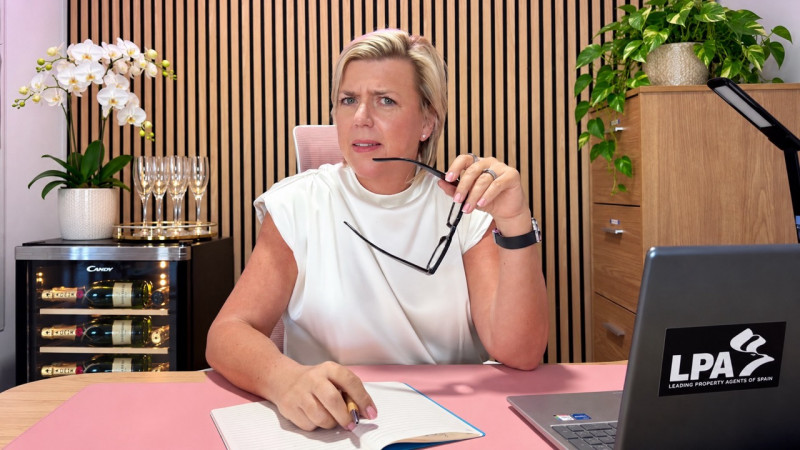
Of all the conversations I have with sellers, the one about price is the most important. It’s also, I’ll admit, the most delicate.
That makes sense. A home is rarely just bricks and mortar. It’s where you raised your family, hosted Christmas lunches on the terrace, or finally lived out the dream of a life in the sun. So when an agent sits down with you and suggests a figure lower than you’d hoped, it can feel personal. It can even feel as if we’re undervaluing your memories.
We’re not. We’re trying to protect your sale.
The pattern I see far too often
It usually goes something like this. A seller lists well above the price the market evidence supports, often against the advice of one or more agents. Initial interest is quiet. Weeks become months. Then comes the first price reduction, then a second, sometimes a third. Eventually the property sells, but it can take two or three times longer than it needed to, and frequently for less than it would have achieved had it been priced correctly at the start.
I understand why it happens. But I’d love more sellers to see that ending coming before they set off down that road.
“We’re not in a hurry, so we can wait”
This is one of the most common things I hear, and I completely respect it. Not every seller needs a quick sale. But being in no hurry doesn’t change what the market will pay. It only changes how long you’re prepared to wait for the market to tell you so.
There’s one golden rule in property: a home is only worth what someone is willing to pay for it. That rule is always in play, whether you’re selling next month or next year.
And time has a way of changing our plans. Over the years I’ve seen circumstances shift for sellers in ways nobody could have predicted. A new job or a family need back home turns a relaxed sale into an urgent one. A health issue arises. A relationship ends, and a jointly owned property becomes a point of tension, with each party holding a very different view of its value. Sadly, some owners have even passed away while their home was still on the market, leaving their families to manage a sale at an already difficult time. And some properties, priced too far above the market, simply never sell at all.
I don’t say this to alarm anyone. I say it because the “we’ll wait” strategy assumes life will stand still while we wait, and it rarely does.
Why work with an agent if you won’t hear their advice?
I ask this gently, because I genuinely want the best result for every seller I work with.
When an agent recommends a price, it isn’t a guess, and it certainly isn’t an attempt to make our job easier. It’s based on what comparable properties have actually sold for, which isn’t always what they were advertised at. It reflects how long similar homes have been sitting on the market, what buyers are asking us for, and the feedback we hear at every viewing. That’s experience and data working together.
If a seller chooses an agent and then sets that knowledge aside, they’re paying for expertise they aren’t using. The most successful sales I’ve been part of have been genuine partnerships, where the owner and I are honest with each other from the start, even when the conversation isn’t an easy one.
Why an honest valuation protects my reputation, and yours
I’ll be candid about something sellers don’t always hear from agents.
It can be tempting for an agent to agree to a high asking price, or even to suggest one. It wins the instruction, it makes for a pleasant first meeting, and the seller leaves happy. The difficult conversations about reductions come later, once the listing has gone quiet. The industry even has a name for it: “buying the instruction.”
I’ve never wanted to work that way.
Here’s something many sellers don’t realise: an agent is only paid when the property sells. Everything we do beforehand is an investment made up front, at our own cost and risk. That includes professional photography and video tours, YouTube and social media campaigns, paid advertising on Google and Meta, premium portal listings, brochures, email campaigns to our buyer database, and countless hours of viewings, follow-ups and feedback. If the property doesn’t sell, that time and money are simply lost.
So when I take on a property, I need to believe there’s a genuine chance of selling it. That isn’t about being difficult. It’s about being responsible, to my business and to you. An agent who will spend their time and budget marketing a property they know is overpriced isn’t really serving the seller. They’re keeping a listing on their books.
That’s why I’ll occasionally, and respectfully, decline to take on a property if the owner is set on a price the market simply won’t support. It’s never a decision I make lightly, and it’s always open to a conversation. But I would rather be honest at the start than accept an instruction knowing it’s likely to lead to months of disappointment, several price drops and a frustrated seller.
My reputation has been built on honest advice and on properties that actually sell. Every listing on my books reflects that. When buyers see one of my properties, I want them to trust that it’s realistically priced and worth viewing. That trust brings them through the door, and it benefits every seller I represent.
A good agent won’t always tell you what you want to hear. But they will tell you the truth, and they’ll put their own time and money behind it.
Finding an agent you can trust
Choosing an agent on the Costa del Sol isn’t easy. This is one of the busiest property markets in Europe, and there are agencies on almost every corner, along with plenty of individuals working independently. For sellers, especially those new to Spain, it can be hard to tell who will genuinely look after their interests and who simply wants the listing.
Unlike some countries, Spain doesn’t require estate agents to hold a licence in most regions, including Andalucía. Standards can therefore vary widely, and it’s often left to sellers to do their own homework.
This is why I’m a member of LPA Spain. For me, membership is a commitment to professional standards and ethical practice, and it holds me accountable to more than just my own word. It gives sellers and buyers an extra layer of reassurance that the agent they’re dealing with is working to recognised standards.
Of course, a membership logo alone doesn’t make a good agent. Trust is earned through how an agent behaves: the honesty of their valuation, the transparency of their communication, and whether they’ll still give you straight advice when it isn’t what you hoped to hear. My aim is for my membership to reflect the way I already work, not to replace it.
When you’re choosing an agent, I’d encourage you to ask a few simple questions:
- How did you arrive at this price, and what comparable sales support it?
- What will you invest in marketing my property?
- Are you a member of a professional association?
- Can I speak with sellers you’ve worked with before?
A good agent will welcome those questions. That openness is often the best sign you’ve found someone you can trust.
Value is in the eye of the beholder
Here’s something worth reflecting on: value is subjective. How much you value your home is entirely valid, but it’s your view. Buyers will form their own, based on their priorities, budgets and tastes.
Standards and preferences differ enormously from person to person. The bespoke kitchen you invested in may be exactly to your taste, while a buyer is already mentally redesigning it. The landscaped garden you love may look like a maintenance commitment to someone who wants a lock-up-and-leave holiday home. Improvements absolutely can add value, but not always euro for euro, and not always in the eyes of the person writing the cheque.
The market doesn’t reward what we’ve spent. It rewards what buyers want.
The psychology of buying and selling
Pricing is as much about human behaviour as it is about numbers. Understanding what’s happening on both sides of the transaction makes the case for pricing well very clear.
On the seller’s side, we naturally value what we own more highly than an outsider would. Psychologists call it the endowment effect: simply owning something makes it feel more valuable to us. Add years of memories, and it’s easy to see why an honest valuation can sting. Sellers also tend to anchor to a number, perhaps what a neighbour’s house was listed at, what they paid plus what they’ve spent, or a figure they need to fund their next move. None of those numbers mean anything to a buyer.
There’s also the fear of “leaving money on the table”. The irony is that overpricing is far more likely to cost money in the end than pricing realistically.
On the buyer’s side, today’s purchasers are extremely well informed. They’ve usually spent weeks or months scrolling the portals and know the market in their price range remarkably well. When a property is overpriced, they don’t think “I’ll make an offer.” Most simply scroll past it and buy something better priced instead. In effect, an overpriced home helps sell the competition.
Portal searches matter too. Buyers filter by price brackets, so a home priced too high can miss the very people most likely to buy it, because it never appears in their search results.
Then there’s the freshness factor. The first few weeks on the market are when interest is at its peak. That’s when your home is new, it’s sent to every registered buyer, and it gets the most attention. Squander that window with the wrong price, and it’s very hard to win back.
The longer a property sits, the more buyers begin to wonder: “What’s wrong with it? Why hasn’t it sold?” Each price reduction, however well meant, can signal that the seller is under pressure, and it invites lower offers rather than stronger ones. Buyers who’ve been watching may simply wait for the next drop.
Finally, buying a home is an emotional decision that people justify with logic. Buyers fall in love with a property, but they also need to feel they’re paying a fair price, both to themselves and, often, to a lender’s valuation. Correct pricing lets the heart and the head say yes at the same time.
Getting the balance right
None of this means underselling your home. A well-priced property is not a cheap one. It’s priced to attract the right buyers, create real interest and, in the best cases, competition. Pricing correctly from the start is often what achieves the strongest final figure.
Getting that balance right is crucial. It means respecting what your home means to you while being realistic about how buyers will see it. It means listening to the evidence, even when it’s not what we’d hoped to hear. And it means seeing your agent as your partner, not your opponent.
In summary
If you’re thinking of selling, my advice is simple:
- Remember the golden rule: your home is worth what a buyer will pay for it.
- Make the most of the first few weeks. They’re your most valuable marketing time.
- Separate the emotional value of your home from its market value.
- Listen to the evidence your agent brings you, and ask questions about it.
- Don’t rely on “waiting it out”. Circumstances can change quickly.
- Choose an agent for their honesty, not for the highest valuation.
- Look for an agent who works to recognised professional standards, such as LPA Spain membership.
Pricing a home is never just about a number. It’s about timing, buyer psychology, market knowledge and, above all, honesty. My role is to give you that honesty, even when it’s the harder conversation, because I want your sale to be a success.
If you’re considering selling on the Costa del Sol and would like an honest, evidence-based conversation about your property’s value, I’d be delighted to help.
Alison Norton
Alison Norton Properties
#AlisonNortonProperties #CostaDelSol #RealEstate #PropertyPricing #SellingYourHome #MijasProperty #SpainProperty


