


If you've been following my updates from the Costa del Sol property market over the years, you'll know I always come back to one thing: first impressions sell homes. And nowhere is that more obvious than when a buyer walks into an empty house versus one that's been thoughtfully staged.
Let me paint you a picture.
The Empty House
You walk into a property with bare walls, echoing rooms, and not a stick of furniture in sight. On paper, the space is exactly the same size as it would be furnished. But somehow it feels smaller, colder, harder to connect with. Buyers stand in the middle of the lounge and struggle to answer a very simple question: where would my sofa even go? Without visual cues, most people can't mentally place their own life in the space. They see a shell, not a home.
The Same House, Staged
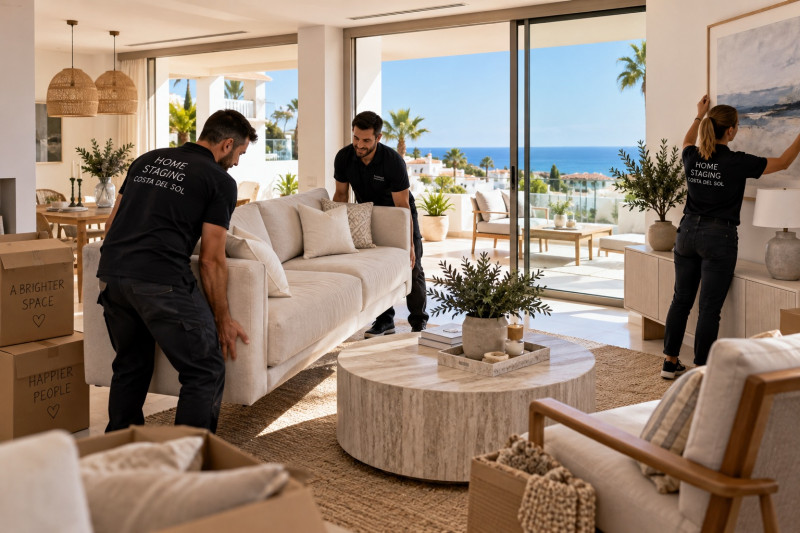
Now picture that identical property with a well-dressed sofa facing the terrace doors, a dining table set for six, soft lighting, a few plants, maybe fresh flowers on the counter. Suddenly the flow of the home makes sense. Buyers stop measuring walls and start imagining Sunday lunches, morning coffee on that terrace, movie nights in the lounge. That emotional connection is often what turns a viewing into an offer.
I've watched this play out time and again here on the coast — the exact same floor plan, valued completely differently by buyers depending on how it's presented.
When Physical Staging Isn't Possible
Of course, traditional staging isn't always realistic. Some of my sellers are based abroad and simply can't get to the property to furnish it. Others are working with a tighter budget and would rather that money went toward the sale price than a temporary furniture package. And some properties are empty because they're new builds, inheritances, or long-term rentals that have just been cleared out.
This is where AI virtual staging has become such a useful tool — and like many agents now, I've added it to my marketing toolkit because it genuinely changes what's possible in these situations. With a set of good-quality photos of the empty rooms, we can generate realistic, tastefully furnished versions of the same space to use in the listing. A buyer scrolling through photos online sees a lounge with furniture, a bedroom that looks lived-in, a dining space that suggests a way of life — all without a single item ever being physically moved into the property.
It's not a replacement for a well-presented, physically staged home when that's achievable — nothing beats walking into a space that already feels finished. But for sellers who are short on funds, overseas, or simply can't make it happen logistically, it gives buyers that same crucial leap of imagination that an empty room struggles to provide. Used honestly and clearly labelled as a visual concept, it's a brilliant tool for helping buyers see potential rather than staring at bare walls and having to do all the imagining themselves.
It's Not Just About Furniture
Staging — whether physical or AI-assisted — is really about removing every barrier between a buyer and their own imagination. That means:
- Deep cleaning, everywhere — buyers notice grubby grout, dusty blinds, and marks on walls far more than sellers realise. A spotless home signals a well-cared-for one.
- Gardens and outdoor space — out here, terraces, pools, and gardens often sell the lifestyle as much as the property itself. Overgrown planters or a neglected pool area undo a lot of good work indoors.
- Depersonalising — family photos, personal collections, strong personal taste in decor — all of it makes it harder for a buyer to picture themselves living there. The goal is a space that feels warm, but neutral enough for anyone to project their own future onto it.
- Every corner counts — wardrobes, under-sink cupboards, garages. Buyers open doors. A cluttered storage space can quietly raise doubts about how much room the property really offers.
- Light and flow — clearing sightlines, opening curtains, making sure each room's purpose is obvious at a glance.
None of this needs to cost a fortune. Sometimes it's a declutter, a fresh coat of paint, and a couple of well-placed furniture pieces. Other times, for an empty property, bringing in show-home furniture — or a set of AI-generated concept images — pays for itself in a faster, stronger offer.
The Details That Buyers Feel Before They Notice Them
Some of the most important staging decisions aren't visual at all — or if they are, they're subtle enough that buyers don't consciously register them. They just feel that a property is "right."
Furniture placement matters more than people think. Pushing everything against the walls to "maximise space" almost always backfires — it makes rooms feel like waiting rooms, not homes. Pulling a sofa slightly away from the wall, angling it toward a focal point like a view or a fireplace, creates natural conversation areas and makes the room feel considered rather than just filled.
Rugs are a small addition that does a lot of heavy lifting. Especially here on the coast, where tiled and marble floors are everywhere for good reason — they're practical in the heat — a bare tiled floor can feel cold and echoey in photos and in person. A well-placed rug under a coffee table or dining set softens the space instantly, adds warmth, and helps define separate zones within an open-plan room.
Scent is the one sellers forget most often, and it can make or break a viewing in seconds. Nobody wants to smell yesterday's cooking, a musty guest room, or a pet the moment they walk through the door. I always recommend a subtle, good-quality diffuser or reed diffuser — nothing overpowering, buyers can be put off by a scent that feels like it's masking something. Something clean and understated does the job far better than a heavily "fragranced" home ever will.
And here's one that's very specific to Spain, and catches a lot of sellers off guard: drains. If a property has been closed up for a while — a holiday home that's sat empty, or somewhere between tenants — the water in the U-bends of every drain and toilet can evaporate. Without that water seal in place, sewer gas can rise straight up into the house, and it is not a pleasant smell for anyone. I've seen it undo an otherwise beautifully presented property in the first thirty seconds of a viewing, because buyers associate that smell with drainage problems, even when there's nothing actually wrong with the plumbing.
The fix is simple but easy to overlook: run every tap, flush every toilet, and pour a jug of water down every drain and shower plughole a day or two before any viewing, and ideally keep doing it regularly if the property is going to sit empty for a stretch. It takes minutes and it can be the difference between a buyer falling in love with a home and walking straight back out the door.
Why Video Matters As Much As Photos
With so much of the search now happening online, especially for buyers relocating from abroad, video has become one of the most powerful tools in presenting a property honestly. Photos can be beautifully composed and still leave a buyer wondering what's just out of frame. A well-shot walkthrough video shows the real flow of a home — how one room leads into the next, the natural light at different times of day, the actual proportions of a space that photos alone can flatten or distort.
It also builds trust before a buyer has even booked a flight. When someone is viewing a property from the UK, Northern Europe, or further afield, video reassures them that what they're seeing genuinely matches what they'll walk into — not an overly wide-angle lens or a carefully chosen angle that hides an awkward layout. That honesty saves everyone time, because the buyers who do travel for a viewing are already emotionally invested and far more likely to move forward with an offer.
A simple, well-lit walkthrough is often enough. It doesn't need to be a production — steady footage, good natural light, a logical route through the property from entrance to garden or terrace, is what does the work. For standout properties, a short drone clip of the surrounding area or the pool and grounds can add real impact too, especially when location and lifestyle are as much a part of the sale as the property itself.
Why Now Matters
We're heading into a busy stretch on the coast — September through to early December is traditionally one of our strongest windows, as buyers plan ahead of the new year, and then things pick up again as soon as January arrives. If you're thinking of putting your property on the market during this period, getting it presentation-ready now means you're front and centre when serious buyers are actively looking, not scrambling to catch up once the season is already underway.
Let's Get Your Property Market-Ready
Every home is different, and the right approach — whether that's a full physical staging, a light refresh, AI-assisted concept images for an empty property, or a proper video walkthrough — depends on your situation, your timeline, and your budget. I'd love to walk through your space (or your photos, if you're not on the coast right now) and talk through exactly what would make the biggest difference.
Send me a WhatsApp on +34 654 713 971 or drop me an email, and let's get your property looking its absolute best before it hits the market.
Alison


